Rarotonga

Searching for Rare Plants

Searching for Rare Plants

Gerald McCormack, CINHT
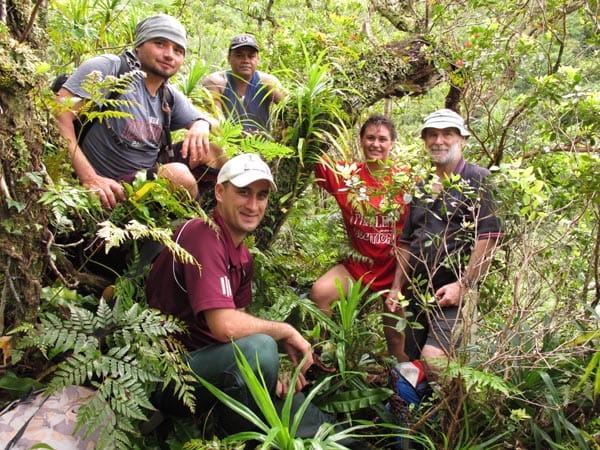
The expedition team from left to right: Jason Tuara, Joe Brider, Edwin Apera (back), Jacqui Evans, Gerald McCormack and photo by Judith Kunzlé.

It has long been hoped that pristine forests at the base of remote and almost inaccessible cliffs might have thriving populations of some of Rarotonga’s rarest plants – maybe even the Pilea, which has not been seen for 80 years.

In July (2010) the Natural Heritage Trust launched a project to assess the status of Rarotonga’s rarest plants. With the assistance of two New Zealand botanists, they explored the island’s native forest, but unfortunately, with one exception, only saw previously known plants. The top ridges of the main mountains were visited, but there is one area the survey failed to get to: the cliffs below the highest ridge, between Te Manga and Te Atukura, in the upper Avana. Continue reading →

Posted by Gerald in Plants, 0 comments
Ātiu – the “land of birds”

Ātiu – the “land of birds”

Gerald McCormack, CINHT

Mariri was the first settler of Ātiu, probably around 1300AD, and he called the island ‘Enua Manu, “land of animals”, in response to the great abundance of animals. The oral traditions do not define the type of animals, and it is commonly thought they were birds, hence “land of birds”. Another interpretation refers to pesky insects that so annoyed Mariri that he went back to ‘Avaiki and returned with some birds to control them.

Today Ātiu has more native landbirds than any other local island so it is very deserving of the interpretation “land of birds” rather than the “land of insects”. The island is a birder’s paradise with nine of the twelve native landbirds that breed in the Cook Islands. Continue reading →

Posted by Gerald in Birds, 0 comments
Geckos and Skinks – Accidental Tourists

Geckos and Skinks – Accidental Tourists

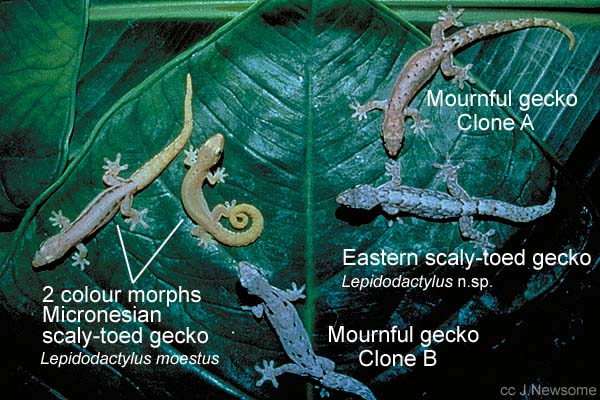
Cook Islands lizards are geckos and skinks. What is the difference? How did they arrive?

Lizards in the Cook Islands are either day-active, glossy-scaled skinks or nocturnal, matt-skinned geckos. The geckos are famous for walking up glass windows and across ceilings, a feat achieved by minute, adhesive filaments under their broad toes. In contrast, skinks have long slender toes with long claws. They have very acute vision to hunt insects and to avoid predators. Continue reading →

Posted by Gerald in Animals, Lizards, 0 comments
The Origin of the Coconut Palm

The Origin of the Coconut Palm

Gerald McCormack, CINHT

Did the Coconut Palm (Cocos nucifera) originate in the Americas? Was it in the Cook Islands when the first Polynesians arrived?

Palms, fruit, flowers and leave – Cook Islands, Rarotonga – Gerald McCormack

The first Western record of Coconut Palms was in 545AD by Cosmos, an Egyptian, who saw them in India and Sri Lanka. Other reports followed, and Marco Polo reported them in Indonesia in 1280. The Portuguese Vasco de Gama discovered the route around Africa to India in 1498. He did not find Coconut Palms on the Atlantic coast of Africa nor in southern Africa. His first record of ‘coquos’ was at Malindi in Kenya. On his way home he left coconuts at Cape Verde, the first in the Atlantic.

In the 1490s Columbus erroneously reported Coconut Palms in the Caribbean. It is now concluded that Diego Corenco, a former pastor of Cape Verde, introduced the first coconuts into the Caribbean to Puerto Rico in 1549. A recent re-evaluation of early Spanish records has concluded that coconuts were pre-Spanish on the Pacific coasts of Costa Rica, Panama and northern Colombia. The writers concluded that coconuts had reached America naturally by floating or they may have been carried by ancient voyagers. Continue reading →

Posted by Gerald in Culture, Plants, 0 comments
The Young Coconut Crab

The Young Coconut Crab

Gerald McCormack, CINHT

Is it true that hermit-crabs develop into Coconut Crabs?

Juvenile and adult coconut crabs – Cook Islands – Gerald McCormack

The Coconut Crab (Birgus latro) is the world’s largest land-crab, often reaching 5kg. They take 7-12 years to reach sexual maturity, and can live more than 50 years. They are nocturnal omnivores, with a preference for coconut meat. Traditional names for large Coconut Crabs include: Unga, Unga Kaveu, Ūngākave‘u, Kaveu, Unga Koveu, and Unga Puku‘ara. Names for smaller ones include Toromimi and Unga ‘Onu.

Adult Coconut Crabs usually live within a few hundred metres of the shore, although they sometimes wander inland more than a kilometre. Years ago I met a large blue one on the summit of Mount ‘Ikurangi (485m elevation and about 2.5km from the shore).

Coconut Crabs are usually blue although some are dull orange-red. The colour is not related to age or sex.

Continue reading →

Posted by Gerald in Animals, Invertebrate, 0 comments