Cook Islands

Our Family of Stinging Fishes

Our Family of Stinging Fishes


The most venomous fishes in the Cook Islands are several Lionfishes and Scorpionfishes, and a Stonefish, which all belong to the Scorpionfishes family. All members of this family have poison glands associated with hollow fin-spines, especially the dorsal spines, to inject poisonous proteins into animals that attack them. Although the puncture wounds from the spines are small and inconspicuous, a sharp throbbing pain develops almost immediately, and within minutes it spreads up the limb and intensifies.

Lionfishes have a weak system of injecting their venom. Scorpionfishes have a more efficient system of injecting the poison. The most serious of all stinging fishes, the Stonefish, has very large poison glands and an extremely efficient system of injecting the venom. The degree of pain is a measure of the seriousness of the sting – Lionfishes and small Scorpionfishes cause the victim to cringe with pain, large Scorpionfishes cause the victim to almost lose control with pain, while the Stonefish causes the victim to thrash about uncontrollably and scream in agony. Only in the most unusual circumstances are stings from Lionfishes and Scorpionfishes life threatening, but a serious sting from a Stonefish, without suitable treatment, can progress over a period of a few hours to extreme breathing difficulty, convulsions, and even death. Continue reading →

Posted by Gerald in Fish, Marine, 0 comments
Searching for Rare Plants

Searching for Rare Plants

Gerald McCormack, CINHT

The expedition team from left to right: Jason Tuara, Joe Brider, Edwin Apera (back), Jacqui Evans, Gerald McCormack and photo by Judith Kunzlé.

It has long been hoped that pristine forests at the base of remote and almost inaccessible cliffs might have thriving populations of some of Rarotonga’s rarest plants – maybe even the Pilea, which has not been seen for 80 years.

In July (2010) the Natural Heritage Trust launched a project to assess the status of Rarotonga’s rarest plants. With the assistance of two New Zealand botanists, they explored the island’s native forest, but unfortunately, with one exception, only saw previously known plants. The top ridges of the main mountains were visited, but there is one area the survey failed to get to: the cliffs below the highest ridge, between Te Manga and Te Atukura, in the upper Avana. Continue reading →

Posted by Gerald in Plants, 0 comments
Polynesian Dogs

Polynesian Dogs

Gerald McCormack, CINHT

What did Polynesian Dogs look like?

Polynesian Dog located at TePapa Museum, Wellington, New Zealand – Te Papa

After Europeans arrived in Polynesia their dogs interbred with and rapidly replaced the docile Polynesian Dogs. The only preserved specimen is of a hunting dog collected in 1876 from southern South Island NZ. White was the favourite colour of NZ Māori dogs and the longer hair was used to make esteemed cloaks or kahu.

Tropical Polynesian Dogs were described as smaller than a large spaniel with a very long back, bowed forelegs, broad head, pointed snout, upright ears and small eyes. They had short to long white, brown or black hair. They were sluggish, yelping rather than barking.

Tuamotu dogs were distinctive in having very long white hair, 10-15cm. Tahitian warriors arrived by canoe to trade bark-cloth for the esteemed hair to decorate their breast-plates. As a food, dogs were preferred over hogs. The dogs were mainly vegetarian, commonly eating Taro and Breadfruit, with some fish. Continue reading →

Posted by Gerald in Animals, Culture, 0 comments
Ātiu – the “land of birds”

Ātiu – the “land of birds”

Gerald McCormack, CINHT

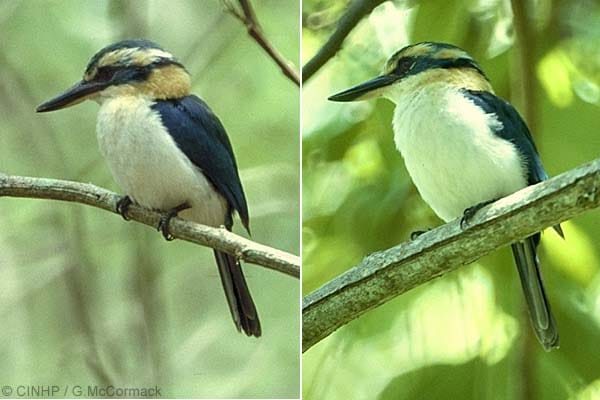
Mariri was the first settler of Ātiu, probably around 1300AD, and he called the island ‘Enua Manu, “land of animals”, in response to the great abundance of animals. The oral traditions do not define the type of animals, and it is commonly thought they were birds, hence “land of birds”. Another interpretation refers to pesky insects that so annoyed Mariri that he went back to ‘Avaiki and returned with some birds to control them.

Today Ātiu has more native landbirds than any other local island so it is very deserving of the interpretation “land of birds” rather than the “land of insects”. The island is a birder’s paradise with nine of the twelve native landbirds that breed in the Cook Islands. Continue reading →

Posted by Gerald in Birds, 0 comments
Geckos and Skinks – Accidental Tourists

Geckos and Skinks – Accidental Tourists

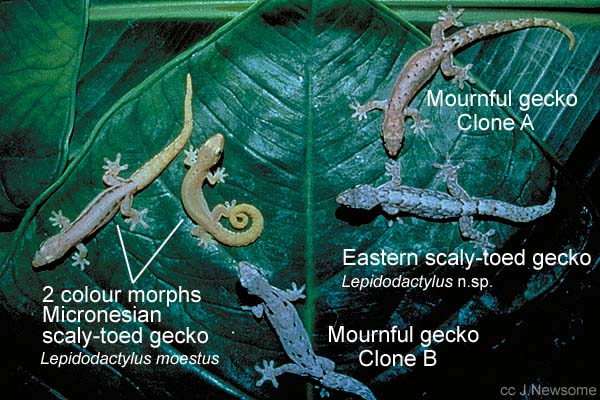
Cook Islands lizards are geckos and skinks. What is the difference? How did they arrive?

Lizards in the Cook Islands are either day-active, glossy-scaled skinks or nocturnal, matt-skinned geckos. The geckos are famous for walking up glass windows and across ceilings, a feat achieved by minute, adhesive filaments under their broad toes. In contrast, skinks have long slender toes with long claws. They have very acute vision to hunt insects and to avoid predators. Continue reading →

Posted by Gerald in Animals, Lizards, 0 comments