



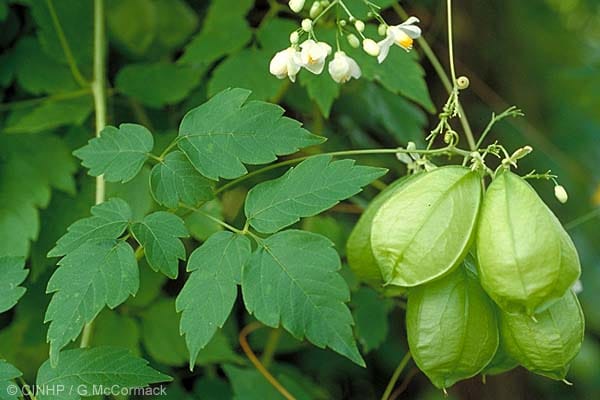
Grand Balloon‑vine, Leaves, flowers and fruit – Cook Islands, Rarotonga – Gerald McCormack
Gerald McCormack, CINHT,
Weeds are plants growing in the wrong place; plants which take time, effort and money to control. The weeds of taro plots, lawns, home gardens and horticultural areas are often encountered and well known. Less obvious are weeds which damage the native forests of inland Rarotonga. The forests which reduce erosion and protect the water supply; the forests which are an economic asset in the tourist industry; the forests which are an aesthetic asset to us all; and, the forests which contain plants and animals not found anywhere else in the world.
The native forests of inland Rarotonga contain fourteen flowering plants, four ferns and two mosses not found anywhere else in the world.
Before the arrival of people in the Cook Islands, the inland forests had about 120 species of flowering plants – the native species. Since the arrival of the ancient Polynesians, 150 foreign flowering plants have been introduced, accidently or on purpose, into the inland forests. While
many have had little impact, some are seriously damaging the native plants. One of the most serious threats is from the fast-growing, fast-spreading Balloon Vine (Cardiospermum grandiflorum), which can form smothering sheets over the tallest trees. Each leaf of the Balloon Vine splits into three branchlets each having three leaflets. The small white flowers hang in bunches, and develop into papery, balloon-like fruits, each having one to three small black seeds. Each seed is attached to a small wing which enables the wind to spread them a long way from the parent plant.
The Balloon Vine was first recorded in 1929 growing near houses in Avarua, but today, it is widespread and common on the red-soil agricultural lands, especially in Tüpapa and Matavera. Inland Matavera Valley is now covered by a suffocating sheet, and more and more areas in other valleys are becoming overgrown. Although the situation on Rarotonga is near hopeless, it is important that Balloon Vine is not accidently introduced to the Outer Islands on an ºei or when transporting other plants. Each new inland road or clearing is an invitation for the Balloon Vine to establish itself and grow over the adjacent native forest. Cutting the stems and pulling out the roots is the only way to slow its smothering progress. Hopefully, scientists will eventually find an insect, which eats nothing but this insidious vine –
the Strangler Vine of Rarotonga.
First Published (16 August 1993)


