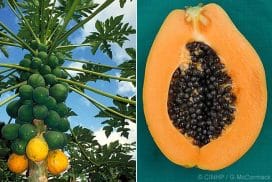
Pawpaw – it’s use, biology and history11/07/2026Gerald McCormack, CINHT, The pawpaw (Carica papaya) is a popular and delicious breakfast fruit. It is sliced and the hundred loose black seeds are easily scraped out to leave the firm orange-yellow or pink flesh, which is eaten raw with or without a squirt of fresh lime juice. These now popular [continue reading…]
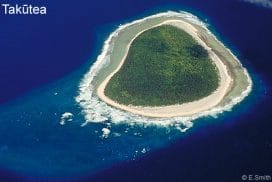
- Takūtea – Island of Seabirds04/07/2026Gerald McCormack, CINHT Takūtea is a small, low, unpeopled island 22km northwest of Ātiu. It has a land area above median high water of about 120 hectares (90 hectares of vegetation and 30 hectares of beach) with a maximum elevation of about 6 metres. It is owned by the people of Ātiu who have [continue reading…]
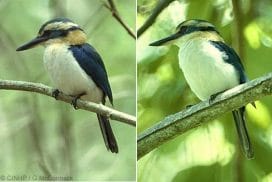
- The Lost Landbirds of Mangaia09/06/2026Gerald McCormack, CINHT, The landbirds which breed on Mangaia, the resident landbirds, can be divided into those introduced by people (the introduced landbirds) and those which arrived naturally (the native landbirds). [continue reading…]
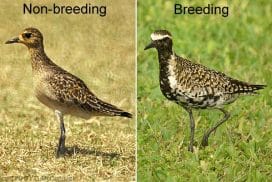
- Confusing the Törea and Kuriri.19/05/2026Gerald McCormack, CINHT On the airport, golf courses, sports fields and larger lawns of the Cook Islands the Common Mynah (Manu Kavamani, Acridotheres tristis) is busy feeding throughout the year. During the summer months they are joined by the Pacific Golden-Plover (Pluvialis fulva), which is dark [continue reading…]
- Mangaia Makatea19/05/2026Gerald McCormack, CINHT, About two million years ago, when Mangaia was around 17 million years old, the whole island started to lift upward out of the sea. At that time, or sometime later, Mangaia was a wide coastal plain of exposed reef-rock adjoining a rounded central mountain, about 100 metres [continue reading…]
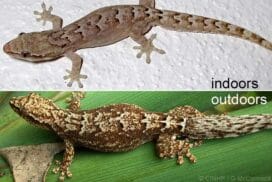
- The Mournful Ladies19/05/2026Gerald McCormack, CINHT The Mournful Gecko (Lepidodactylus lugubris), about 80mm from nose to tail-tip, is the most common household lizard in the Cook Islands and throughout the Pacific. Like other gecko lizards, it hides during the day and hunts insects at night, especially on walls near lights. [continue reading…]
- The Paiere of Maºuke19/05/2026Gerald McCormack, CINHT The one-man fishing canoe (paiere) of Maºuke, is almost identical to those of ºÄtiu and Mitiºäro, the other two islands of Ngäpütoru. The hull of the canoe, also called paiere, is a dug-out log about 4 metres long. The preferred wood is Tamanu (Beauty-leaf, Calophyllum [continue reading…]