Climate Change

El Niño: Droughts, Cyclones and Coral Bleaching

Gerald McCormack, CINHT

During the summer of 1982-83 Rarotonga experienced a severe drought. Although some water continued to flow into the mains, there was only enough for those near the source – remote areas, like Nikao and Arorangi, were lucky to have a trickle after midnight when the upstream users were asleep. In some areas trucks filled temporary tanks in the streets, and householders carried it in buckets into their homes.

As the drought progressed we learnt that many other parts of the world were also having unusual weather – droughts in some places, torrential rain in others. We were also told that the cause was something called El Niño. Apparently about a hundred years ago Peruvian fishermen noticed that the arrival of a warm ocean current around Christmas was the first indication of a disastrous fishing season, and widespread heavy rain causing landslides and floods. Because of its arrival time they called it the “current of the (Christ) Child”. Gradually the current and the associated weather became known as El Niño, variously translated as “the Christ child”, “the Child”, or “the little Boy”.

After the extreme 1982-83 event scientists became very active in seeking to explain and predict such irregular weather events. As a result the term El Niño was soon joined by others: Southern Oscillation (SO), Southern Oscillation Index (SOI), ENSO (El Niño and Southern Oscillation), and Warm Event. More recently we have learnt that after an El Niño the weather may overshoot “normal” and go to the opposite extreme. This “opposite of El Niño” is a La Niña (“the girl child”) – or a Cold Event, because conditions off Peru are colder than usual. Continue reading →

Posted by Gerald in Weather, 0 comments
Will nodule mining destroy our deep sea ecosystem services?

Will nodule mining destroy our deep sea ecosystem services?

Gerald McCormack, Natural Heritage Trust
First published Cook Islands News (29 May 2021),  updated here (29 May 2021)

In an article concerning the possibility of seabed nodule mining in the Cook Islands (Cook Islands News 27 March), Te Ipukarea Society wrote “We are confident that further research will show that the goods and services that the ocean provides humanity are actually worth many times more than what we will get from mining, and for a much longer term.”

In discussing this claim I will focus on deep sea services because with a precautionary approach to nodule mining the main impacts will be in the deep sea rather than the surface waters. The variety and global values of the main deep sea services are presented in the 2020 Food and Agriculture Organisation (FAO) circular: “Economic value of ecosystem services from the deep sea and the areas beyond national jurisdiction” (Ottaviani 2020).((Ottaviani (2020) Economic value of ecosystem services from the deep seas and the areas beyond national jurisdiction. FAO Fisheries and Aquaculture Circular No. 1210. Rome, FAO.)) Although the circular is focused on the “areas beyond national jurisdiction” (ABNJ), or International Waters, it also includes the deep sea within “exclusive economic zones” (EEZs), which makes it inclusive of the Cook Islands polymetallic nodule fields. Continue reading →

Posted by Gerald in Deep Seabed Mining, Ecology, 0 comments
Will Seabed Mining Increase Climate Change?

Will Seabed Mining Increase Climate Change?

Gerald McCormack, Natural Heritage Trust
First published CI News 26 Sept. 2019, modified 10 Feb. 2021.

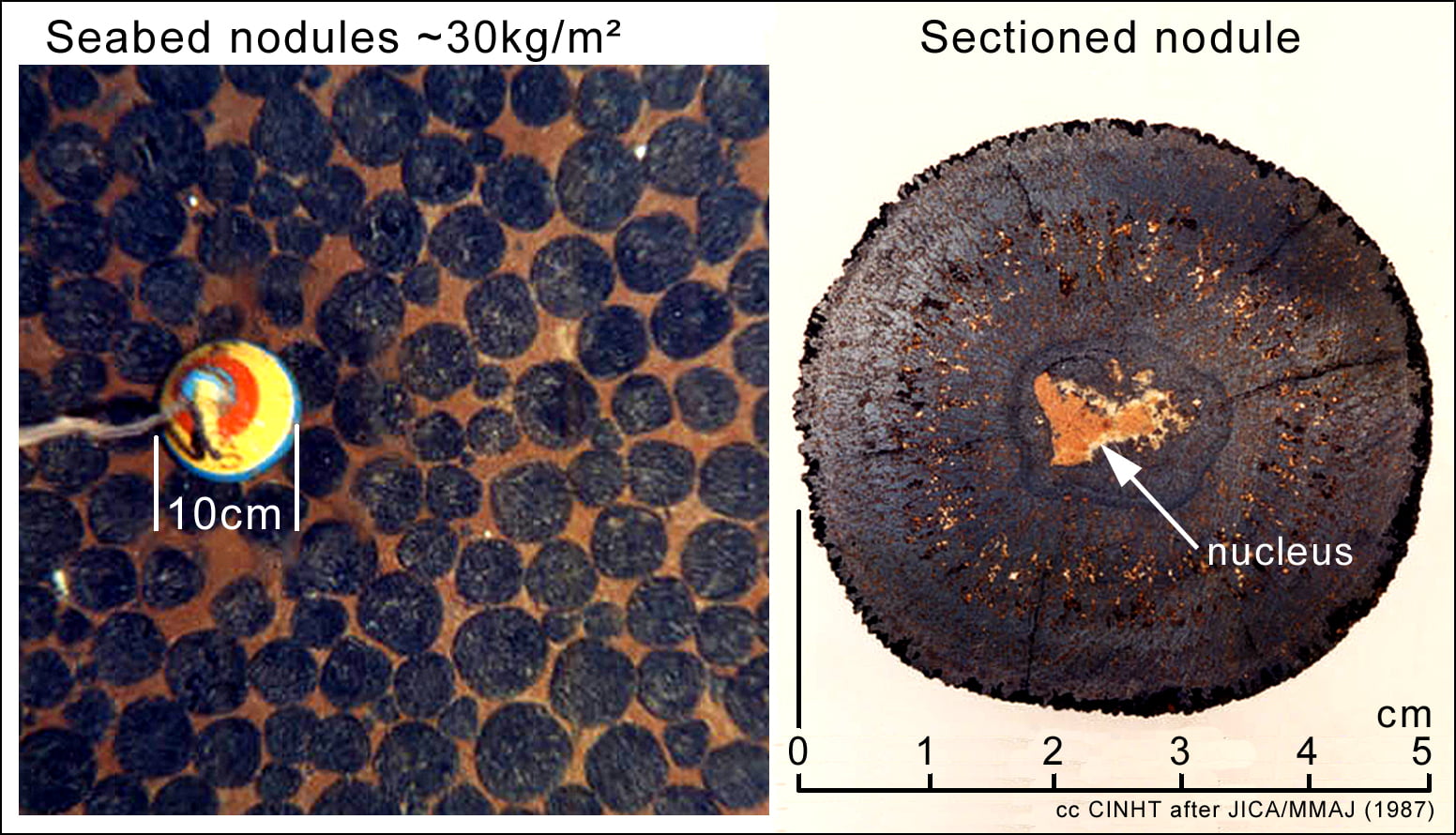
South Penrhyn Basin nodules above the sediment

In July 2019, the Greenpeace report “In Deep Water” warned: “By impacting on natural processes that store carbon, deep sea mining could even make climate change worse by releasing carbon stored in deep sea sediments or disrupting the processes which ……. deliver it to those sediments. Deep sea sediments are known to be an important long-term store of ‘blue carbon’, the carbon that is naturally absorbed by marine life, a proportion of which is carried down to the sea floor as those creatures die.”

Continue reading →

Posted by Gerald in Climate Change, Deep Seabed Mining, 0 comments