


Gerald McCormak, CINHT,
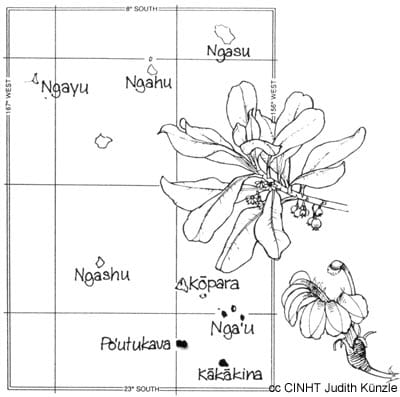
Map depicting the names of the Half-flower different islands of the Cook Islands


Gerald McCormak, CINHT,
Map depicting the names of the Half-flower different islands of the Cook Islands
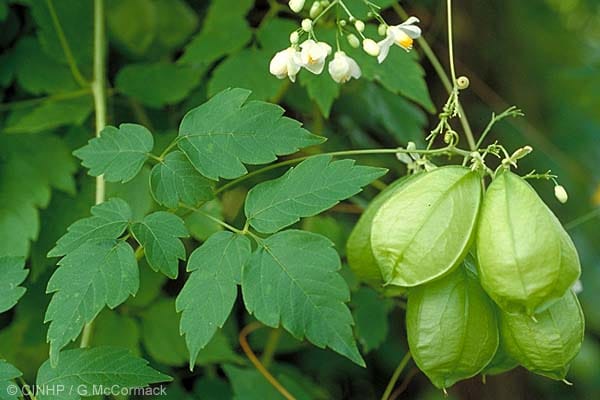
Grand Balloon‑vine, Leaves, flowers and fruit – Cook Islands, Rarotonga – Gerald McCormack
Gerald McCormack, CINHT,
Weeds are plants growing in the wrong place; plants which take time, effort and money to control. The weeds of taro plots, lawns, home gardens and horticultural areas are often encountered and well known. Less obvious are weeds which damage the native forests of inland Rarotonga. The forests which reduce erosion and protect the water supply; the forests which are an economic asset in the tourist industry; the forests which are an aesthetic asset to us all; and, the forests which contain plants and animals not found anywhere else in the world. Continue reading →
Gerald McCormack, CINHT

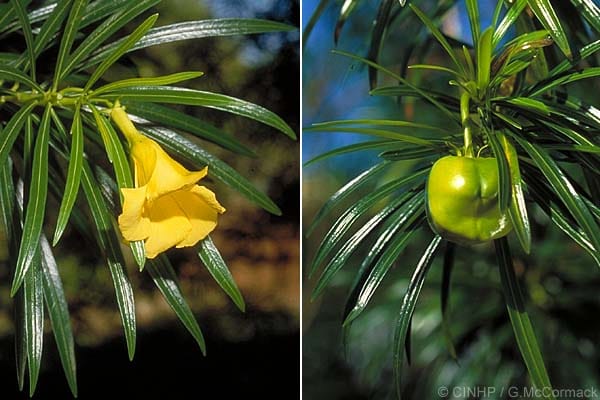
Yellow Oleander, Leaves, flower and fruit – Gerald McCormack
Yellow Oleander is an ornamental tree from tropical America, which is widespread in the Southern Cooks. It has yellow, funnel-like flowers, which develop into angular fruit, about 5cm across. The tree has attractive hanging foliage and grows to about 5 metres in height.
The scientific name is Cascabela thevetia, although you’ll find it in most books under its former name, Thevetia peruviana.
In English, the Yellow Oleander also known as the Be-still Tree. As the foliage and flowers move in the slightest breeze it is easy to imagine photographers yelling “Be-still!” However, this is not how it got its unusual name. The unlikely name, Be-still Tree, is a macabre reference to the ability of the plant to kill people. All parts of the plant, especially the seeds, are deadly poisonous.
A case from Brisbane reported that a 3-year-old girl ate some unknown parts of Yellow Oleander, probably the seeds, in the late afternoon. She suffered a cardiac arrest in the ambulance and was dead by 11pm. A single seed can kill a small child.
The signs of Yellow Oleander poisoning are nausea, vomiting, diarrhea, high blood pressure and irregular heart beat. Death results from cardiac arrest.

Pink Oleander, Leaves and flowers – Cook Islands, Rarotonga – Gerald McCormack
Early vomiting is a blessing as it often removes sufficient material from the stomach to avoid death. However, if you suspect that a child has eaten any part of Yellow Oleander, immediately seek assistance from a doctor.
The more common Pink Oleander (Tärona, Oleander nerium), or Rose-bay Tree, is equally poisonous. Fortunately, its deadly nature is well known and it does not have such interesting fruit to attract the attention of young children. Nevertheless, a single leaf is potentially lethal, and heat does not destroy the poison.
In Australia there was a case of a woman dying after mistakenly making a herbal tea of oleander leaves; and in another case, several people were rescued unconscious from a smoky room, where they were burning oleander wood to keep warm.
Gerald McCormack, CINHT,

Neinei Tree, Leaves and flower – Cook Islands, Rarotonga – Gerald McCormack
The Neinei tree of Rarotonga has such a spectacular flower that the tree itself is often called the Pua Neinei (Flower-of-the-Neinei). The Neinei (Rarotonga Fitchia) is a small tree common in the mountains, from the base of low valleys to the top of the highest mountains. It is not found anywhere else in the world, although it has a few shrubby relatives in French Polynesia.
The large leaves are in terminal bunches, and they often have conspicuous grooves, cut inward from the edge. These are the feeding grooves of the 15mm Neinei Weevil (Rhyncogonus lineatus), which feeds exclusively on the young leaves of the Neinei. Like the plant, this weevil is not found anywhere else in the world, although it does have close relatives in Hawaii as well as in French Polynesia.
The Neinei flowers from April to June. The flowers are large, spiky, bright orange and full of nectar.
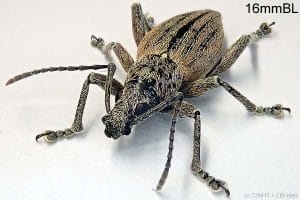
Neinei weevil, Adult [16mmBL] – Cook Islands, Rarotonga – Joseph Brider 2020-12
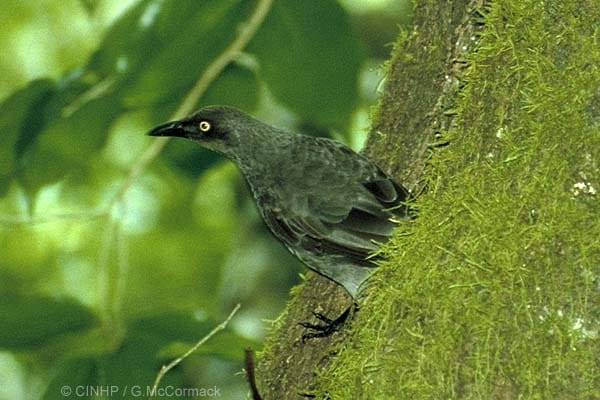
The Rarotonga Starling is not found anywhere else in the world, and its closest relative, the Mauke Starling (Aplonis mavornata) of Maºuke, which was last recorded about 150 years ago, in 1825. In the olden days the `Ī´oi was the protector of fugitives and food-gatherers in the forest, because it called when other people approached. A famous traditional saying was: `Ī´oi -karanga (starling warns).

Rarotonga Starling, Adult emerging from nest-hole in tree trunk – Cook Islands, Rarotonga – Gerald McCormack
The fame of the starling’s warning call was reflected in the first anti-government newspaper, the Ioi Karanga, published during 1898.
Moss launched the bilingual Te Torea in 1894, it was published by Henry Nicholas, a European-NZ Maori in Rarotonga since the 1860s, on the leased Government printing press. The first Catholics and SDAs settled on Rarotonga in 1894. The SDAs included the American SDA Dr Caldwell, who became the first resident doctor in 1894 and a makeshift hospital was opened in May 1896. In October he was told to stop having religious meeting in the hospital. The Craig brothers arrived in March 1897 and Dr George Craig was within weeks made hospital superintendent. Craig and a number of Europeans started to strongly oppose Moss’s administration. In January 1898 Makea Ariki, exploiting anti-Moss situation, had the printing press forcibly taken from Nicholas as part of her own campaign against Moss. She then started to print the Ioi Karanga on the press. A short-lived newspaper. In mid-1898 Moss, in ill-health and 71 years old, resigned. He left in September. Gudgeon immediately appointed George Craig as medical officer.
First published CINEWS(3 July 199) updated (September 2010)
Gerald McCormack, CINHT
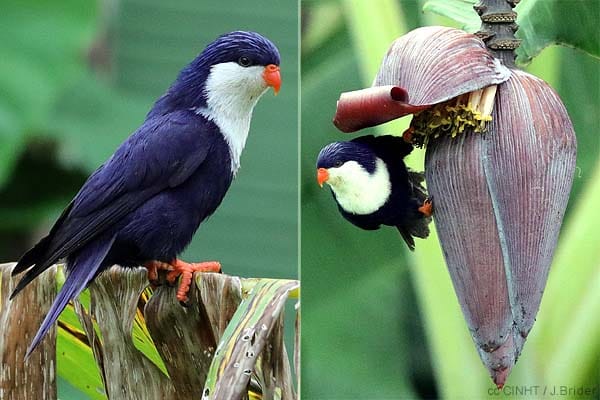
Adult on Banana leaf and flower – Cook Islands, Aitutaki – Joseph Brider 2021-10
The Blue Lorikeet (Vini peruviana ) is a native bird of French Polynesia, formerly existing on about twenty islands in the Society Islands (including Tahiti) and the northern Tuamotu atolls. In recent years it has been lost from Tahiti and all the main Society Islands, surviving only on three remote atolls to the northwest (especially Bellinghausen/Motu One) and on three or four atolls of the Tuamotus. Continue reading →


