Plants

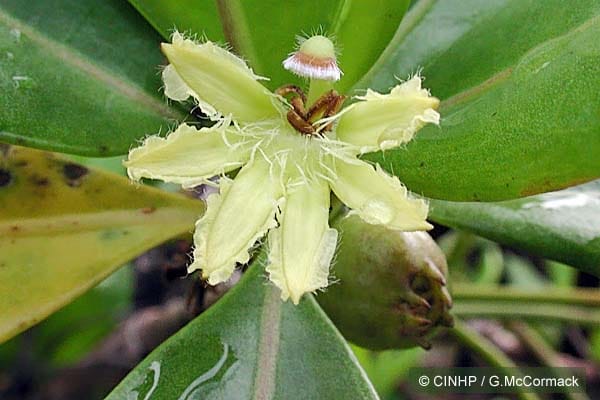
The Half-flower’s Many Names

The Half-flower’s Many Names

Gerald McCormak, CINHT,

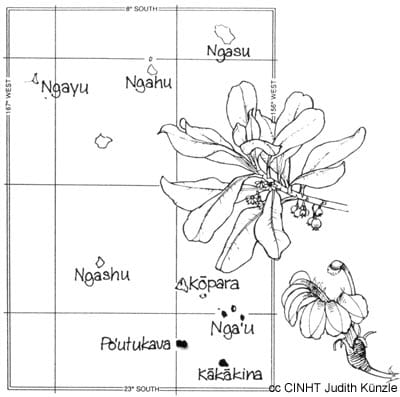
Map depicting the names of the Half-flower different islands of the Cook Islands

One of the most widespread and conspicuous coastal shrubs in the Cook Islands has bright green, fleshy, hand-sized leaves; small white flowers, and grape-sized white fruit. The English name Half-flower (Scaevola taccada), although not widely used, refers to the fact that the petals are restricted to one half of the flower. Continue reading →

Posted by Gerald in Plants, 0 comments
The Strangler Vine of Rarotonga

The Strangler Vine of Rarotonga

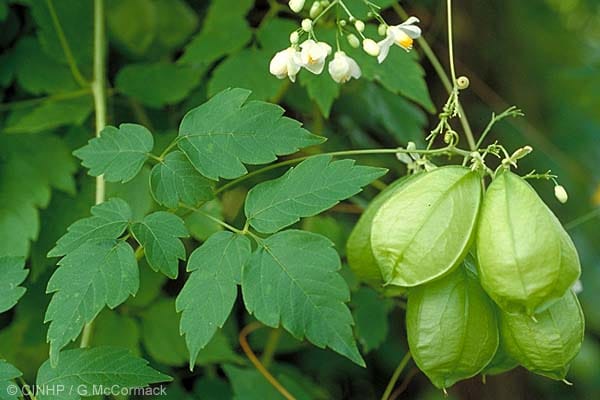
Grand Balloon‑vine, Leaves, flowers and fruit – Cook Islands, Rarotonga – Gerald McCormack

Gerald McCormack, CINHT,

Weeds are plants growing in the wrong place; plants which take time, effort and money to control. The weeds of taro plots, lawns, home gardens and horticultural areas are often encountered and well known. Less obvious are weeds which damage the native forests of inland Rarotonga. The forests which reduce erosion and protect the water supply; the forests which are an economic asset in the tourist industry; the forests which are an aesthetic asset to us all; and, the forests which contain plants and animals not found anywhere else in the world. Continue reading →

Posted by Gerald in Plants, 0 comments
Beware of the Oleanders

Beware of the Oleanders

Gerald McCormack, CINHT

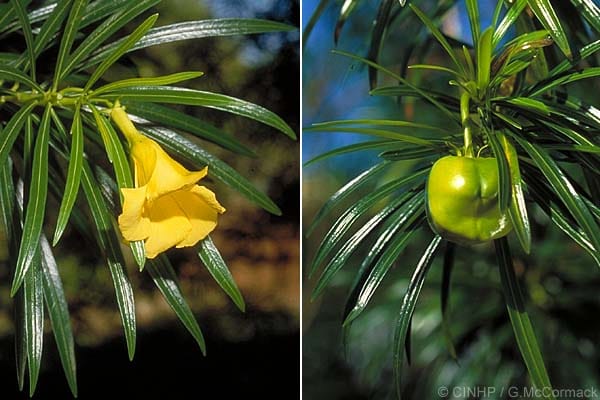
Yellow Oleander, Leaves, flower and fruit – Gerald McCormack

Yellow Oleander is an ornamental tree from tropical America, which is widespread in the Southern Cooks. It has yellow, funnel-like flowers, which develop into angular fruit, about 5cm across. The tree has attractive hanging foliage and grows to about 5 metres in height.

The scientific name is Cascabela thevetia, although you’ll find it in most books under its former name, Thevetia peruviana.

In English, the Yellow Oleander also known as the Be-still Tree. As the foliage and flowers move in the slightest breeze it is easy to imagine photographers yelling “Be-still!” However, this is not how it got its unusual name. The unlikely name, Be-still Tree, is a macabre reference to the ability of the plant to kill people. All parts of the plant, especially the seeds, are deadly poisonous.

A case from Brisbane reported that a 3-year-old girl ate some unknown parts of Yellow Oleander, probably the seeds, in the late afternoon. She suffered a cardiac arrest in the ambulance and was dead by 11pm. A single seed can kill a small child.

The signs of Yellow Oleander poisoning are nausea, vomiting, diarrhea, high blood pressure and irregular heart beat. Death results from cardiac arrest.

Pink Oleander, Leaves and flowers – Cook Islands, Rarotonga – Gerald McCormack

Early vomiting is a blessing as it often removes sufficient material from the stomach to avoid death. However, if you suspect that a child has eaten any part of Yellow Oleander, immediately seek assistance from a doctor.

The more common Pink Oleander (Tärona, Oleander nerium), or Rose-bay Tree, is equally poisonous. Fortunately, its deadly nature is well known and it does not have such interesting fruit to attract the attention of young children. Nevertheless, a single leaf is potentially lethal, and heat does not destroy the poison.

In Australia there was a case of a woman dying after mistakenly making a herbal tea of oleander leaves; and in another case, several people were rescued unconscious from a smoky room, where they were burning oleander wood to keep warm.

Author’s notes
First published CINEWS (9 October 1993)
Posted by Gerald in Plants, 0 comments
Toa – Pacific Ironwood

Toa – Pacific Ironwood

Gerald McCormack, CINHT

Leaves, flowers and fruit (1) – Cook Islands, Rarotonga – Gerald McCormack

The Toa (Ironwood) of the Cook Islands, Casuarina equisetifolia, is a native tree of Malaysia, Australia and some islands in the western Pacific. It was probably spread eastward through Southern Polynesia by the ancient Polynesian settlers, and now grows naturally on many islands.

Throughout the Southern Group it grew well and spread naturally along the shorelines and into the fernlands of the inland mountains. In contrast, it did not grow well nor spread itself on the northern atolls, where it is uncommon, rare or absent.

The thin green parts which look like leaves are not leaves; they are green branchlets, which perform the leaf-function of changing the energy of sunlight into the energy of sugars. When you snap a branchlet, the minute pale projections at the break are all that remain of the true leaves.

Leaves, flowers and fruit (2) – Cook Islands, Mangaia – Gerald McCormack

Although the Toa looks like a relative of the pine tree, it is more closely related to the hibiscus and gardenia than the pine. The Toa is a flowering plant. The female flowers are each represented by a delicate pink filament on a small knob on the branch among the green branchlets. When they have been pollinated the knob grows into a woody fruit which contains lots of small seeds. The pollen is made by the male flowers which are the pale, bushy tails, typically on the ends of some branchlets.

Toa in general, and sometimes the heartwood (taiki), is the preferred wood for making many things, such as: beaters (tïtï) for slit-gongs; outrigger booms (kiato) on canoes; planting sticks for Taro (pao-taro); adze-handles (kakau-toki); recreational throwing discs (pua); and, parts of the framing of traditional dwellings. In pre-Missionary times it was also used to make spears (räkau), clubs (patu) and God-images (atua).

A solution made from scrapings of the inner bark is one of several herbal medicines (vai räkau) used for mouth thrush (kea) in children and for some urinary problems (mimi and mimi-tätua).

The English name Ironwood is used in different countries for different species of trees and is therefore confusing to overseas visitors. In Australia Casuarina equisetifolia is known as Beefwood, Horsetail Tree or Sheoke. The name Sheoke is thought to be a combination of ‘sshh’ (the sound of the wind passing through the branchlets) and ‘oak’ (the wood being very hard, like European Oak).

Author’s notes

First published CINEWS (18 June 1994)

Posted by Gerald in Culture, Plants, 0 comments
Tiare Mäori and Tiare Taina

Tiare Mäori and Tiare Taina

Gerald McCormack, CINHT

Tiare Maori, Flowers and leaves, and fruit insert – Cook Islands, Rarotonga – Gerald McCormack

The Tiare Mäori (Gardenia taitensis), or simply Tiare, of the Cook Islands is typically a small branching shrub with fragrant, pure white flowers having 6-9 petals and reaching to 10 cm in diameter. The flowers, which open in the evening and are abundant from October to April, are famous in personal adornment as a single flower tucked over the ear or embedded in the hair, or as a collection threaded into neck (ºei kakï ) or head garlands (ºei katu). It is the essential ingredient of a popular scented coconut oil (ºAkari Tiare, Manongi Tiare, or Mori Tiare) used as a body lotion, and it is used in several traditional herbal medicines. Continue reading →

Posted by Gerald in Culture, Plants, 0 comments