Biodiversity

The Status of Cook Islands Birds -1996

The Status of Cook Islands Birds -1996

Gerald McCormack, CINHT

The Cook Islands is fifteen small islands (total land area 240km²), scattered over an area approaching the size of Western Europe, in the tropical South Pacific. Although the 18,000 residents, almost all Polynesian, carry New Zealand passports, the country has been internally self-governing since 1965, and is independently responsible for all environment matters.

Two divisions of Government are specifically concerned with the environment: (1) the Environmental Service (formerly the Conservation Service) implements the environment act, with a special emphasis on Environmental Impact Assessment; and (2) the Natural Heritage Project undertakes research, and prepares publications, to integrate traditional and scientific knowledge on all aspects of the environment. The latter project, formalised in 1990 by the Prime Minister, Sir Geoffery Henry KBE, is unique in the South Pacific.

The limited availability of specialist staff, and of financial resources, has meant that overseas volunteers and funding have been of fundamental importance in monitoring and maintaining the inherently fragile terrestrial and coral-reef ecosystems. Land is under family-inherited ownership and, although it cannot be sold, a small amount is leased to the Government and to non-family people.

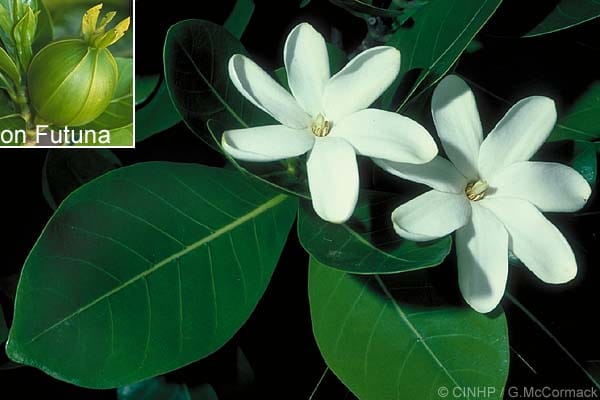
The fifteen islands divide socially and physically into a Northern Group of six islands and a Southern Group of nine islands. The five atolls and one sand-cay of the Northern Group, support extensive Coconut Palm plantations for a fickle copra industry. The only resident landbird is the Pacific Pigeon (Rupe, Ducula pacifica), which lives on three atolls, feeding mainly on the fruits of the indigenous Beach Gardenia(Ano, Guettarda speciosa).

Continue reading →

Posted by Gerald in Animals, Birds, 0 comments
Rare Seabirds on Aitutaki and Rarotonga

Rare Seabirds on Aitutaki and Rarotonga

Gerald McCormack, CINHT

Laughing Gulls

Adults (right & top), Juvenile (bottom) – Cook Islands, Aitutaki – Gerald McCormack

Seagulls are such common seabirds in New Zealand, Australia and America, that it always comes as a surprise for visitors to find no seagulls in the Cook Islands, assuming they ignore the two plastic ones at the Deli in Foodland. Although seagulls seem like the most adaptable scavengers we can imagine, they have not managed to establish themselves on the islands of tropical Polynesia. The nearest island to have resident seagulls is New Caledonia.

It was therefore surprising when people reported a dull brown seagull at Avatiu and at Muri in April 1992. It stayed a few weeks and then disappeared. Since then a similar type of seagull has been reported during the early months of 1995, 1997 and 1998. These birds were all first-year Laughing Gulls (Leucophaeus atricilla). This means that on each occasion it was a different bird that was seen, and only on one occasion did two birds visit together.

Continue reading →

Posted by Gerald in Animals, Birds, 0 comments
Pacific Pigeon (Rupe) – It’s Call

Pacific Pigeon (Rupe) – It’s Call

Adult Rupe – Gerald McCormack -2010

The Pacific Pigeon (Rupe, Ducula pacifica) is the largest forest bird of the Cook Islands. It is dark green on the upper wings and back, with a pale grey neck, head and underside. The adult has a prominent lump on top of its beak. The sexes are identical in appearance. The pigeon has two distinctive calls and many residents believe the calls are gender specific. This article presents detailed observations by Don Organ that support this idea.

The Pacific Pigeon has a native range from the Lau Group (eastern Fiji) through Samoa and Tonga to the Cook Islands. It feeds on fruits, especially Guettarda (‘Ano, Guettarda speciosa), Pacific Banyan (Ava, Ficus prolixa), Perfume Tree (Mata‘oi, Cananga odorata), Kapok buds (Mama‘u, Ceiba pentandra) and Cecropia (Rau-Māniota, Cecropia pachystachya). It is present on the Southern Group islands of Rarotonga, ‘Ātiu, Ma‘uke, Miti‘āro, and Palmerston. In the Northern Group it is present on Manihiki and Pukapuka. Why this native pigeon is missing from Mangaia, while it survives on other similarly man-modified uplifted islands, is a mystery. Continue reading →

Posted by Gerald in Animals, Birds, 0 comments
Cook Islands Fruit-Dove (Kūkupa)

Cook Islands Fruit-Dove (Kūkupa)

Adult and chick – Joseph Brider, 2021

Gerald McCormack, CINHT

The Cook Islands Fruit-Dove (Kūkupa, Ptilinopus rarotongensis) lives only on the islands of Rarotonga and Ātiu, making it a 2-island endemic of the Cook Islands. It was recorded on Ma‘uke in the 1820s but was lost sometime before 1970 – cause unknown. It was also in the fossil record of Mangaia but was lost before the arrival of the Missionaries. Continue reading →

Posted by Gerald in Animals, Birds, 0 comments
Cook Islands’ Largest Butterfly – the Monarch

Cook Islands’ Largest Butterfly – the Monarch

Monarch Butterfly (Danaus plexippus) Left: Caterpillar Right: adult butterfly – Gerald McCormack

Gerald McCormack, CINHT

Our largest native butterfly is the Monarch Butterfly(Pepe Renga, Danaus plexippus) which is present on all the Southern Group islands. It is orange and black, with a wingspan to 10cm. It is usually seen near the Red Cottonweed(Tirika, Asclepias curassavica), a wayside weed. The adult sucks nectar from a variety of flowers, while the caterpillar requires a plant in the milkweed family, such as Red Cottonweed (aka Butterfly Weed, Bloodflower). The caterpillars grow to 5cm in length, and are covered with narrow yellow, black, and white bands. Continue reading →

Posted by Gerald in Insects, 0 comments