Cook Islands

Seven Palms from One Coconut?

Seven Palms from One Coconut?

7 palms 1 nut – Rarotonga, Gerald McCormack

Gerald McCormack, CINHT
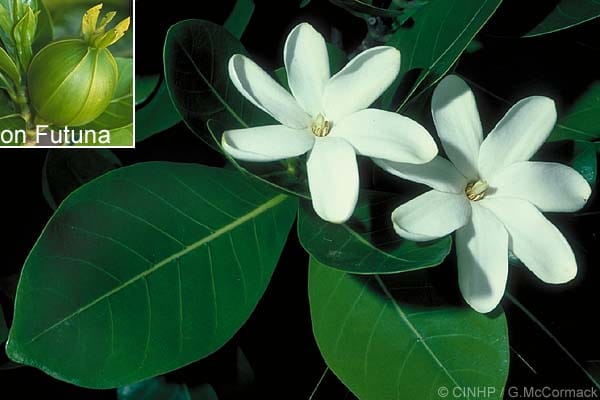
On Rarotonga it is sometimes claimed that the seven palms east of the Avarua roundabout grew from one seednut. On Aitutaki it is claimed that the six palms at the Visitor Centre grew from one seednut. Are these claims fact or fiction?

Both curiosities are now gone but were present at the time this article was written in 2003.

A coconut has three pores at the base and, typically, a lone sprout emerges from the single soft pore. Sometimes the embryo forms a twin and two sprouts emerge through the soft pore. On very rare occasions, as once on a Lever Brothers plantation in the Solomons, an embryo developed under each of the three pores and each embryo twinned to give rise to six shoots – although only four survived. Continue reading →

Posted by Gerald in Culture, Plants, 0 comments
Pacific Pigeon (Rupe) – It’s Call

Pacific Pigeon (Rupe) – It’s Call

Adult Rupe – Gerald McCormack -2010

The Pacific Pigeon (Rupe, Ducula pacifica) is the largest forest bird of the Cook Islands. It is dark green on the upper wings and back, with a pale grey neck, head and underside. The adult has a prominent lump on top of its beak. The sexes are identical in appearance. The pigeon has two distinctive calls and many residents believe the calls are gender specific. This article presents detailed observations by Don Organ that support this idea.

The Pacific Pigeon has a native range from the Lau Group (eastern Fiji) through Samoa and Tonga to the Cook Islands. It feeds on fruits, especially Guettarda (‘Ano, Guettarda speciosa), Pacific Banyan (Ava, Ficus prolixa), Perfume Tree (Mata‘oi, Cananga odorata), Kapok buds (Mama‘u, Ceiba pentandra) and Cecropia (Rau-Māniota, Cecropia pachystachya). It is present on the Southern Group islands of Rarotonga, ‘Ātiu, Ma‘uke, Miti‘āro, and Palmerston. In the Northern Group it is present on Manihiki and Pukapuka. Why this native pigeon is missing from Mangaia, while it survives on other similarly man-modified uplifted islands, is a mystery. Continue reading →

Posted by Gerald in Animals, Birds, 0 comments
Cook Islands Fruit-Dove (Kūkupa)

Cook Islands Fruit-Dove (Kūkupa)

Adult and chick – Joseph Brider, 2021

Gerald McCormack, CINHT

The Cook Islands Fruit-Dove (Kūkupa, Ptilinopus rarotongensis) lives only on the islands of Rarotonga and Ātiu, making it a 2-island endemic of the Cook Islands. It was recorded on Ma‘uke in the 1820s but was lost sometime before 1970 – cause unknown. It was also in the fossil record of Mangaia but was lost before the arrival of the Missionaries. Continue reading →

Posted by Gerald in Animals, Birds, 0 comments
Cook Islands’ Largest Butterfly – the Monarch

Cook Islands’ Largest Butterfly – the Monarch

Monarch Butterfly (Danaus plexippus) Left: Caterpillar Right: adult butterfly – Gerald McCormack

Gerald McCormack, CINHT

Our largest native butterfly is the Monarch Butterfly(Pepe Renga, Danaus plexippus) which is present on all the Southern Group islands. It is orange and black, with a wingspan to 10cm. It is usually seen near the Red Cottonweed(Tirika, Asclepias curassavica), a wayside weed. The adult sucks nectar from a variety of flowers, while the caterpillar requires a plant in the milkweed family, such as Red Cottonweed (aka Butterfly Weed, Bloodflower). The caterpillars grow to 5cm in length, and are covered with narrow yellow, black, and white bands. Continue reading →

Posted by Gerald in Insects, 0 comments
Mato – Cyclones Make it Flower

Mato – Cyclones Make it Flower

Gerald McCormack, CINHT

Flowering Mato tree – Rarotonga, Cook Islands – Gerald McCormack

Rarotonga has one of the last pristine native-forests in Polynesia. The ancient Polynesian settlers removed the forest on the lower hills and as these became infertile they developed into the Fernlands. After European Contact, especially after 1823, many new plants were introduced and some of these were planted in the mountains, especially cotton, coffee, and bananas. A Disturbed Forest of Tree Hibiscus (‘Au, Hibiscus tiliaceus) and invasive shrubs now cover these areas. Inland of the Fernland and the Disturbed Forest there remains a near-pristine native forest, protected from people by being too steep for horticulture and by the absence of trees suitable for timber. Continue reading →

Posted by Gerald in Plants, 0 comments