Gerald McCormack, Natural Heritage Trust
First published Cook Islands News (29 May 2021), updated here (29 May 2021)
In an article concerning the possibility of seabed nodule mining in the Cook Islands (Cook Islands News 27 March), Te Ipukarea Society wrote “We are confident that further research will show that the goods and services that the ocean provides humanity are actually worth many times more than what we will get from mining, and for a much longer term.”
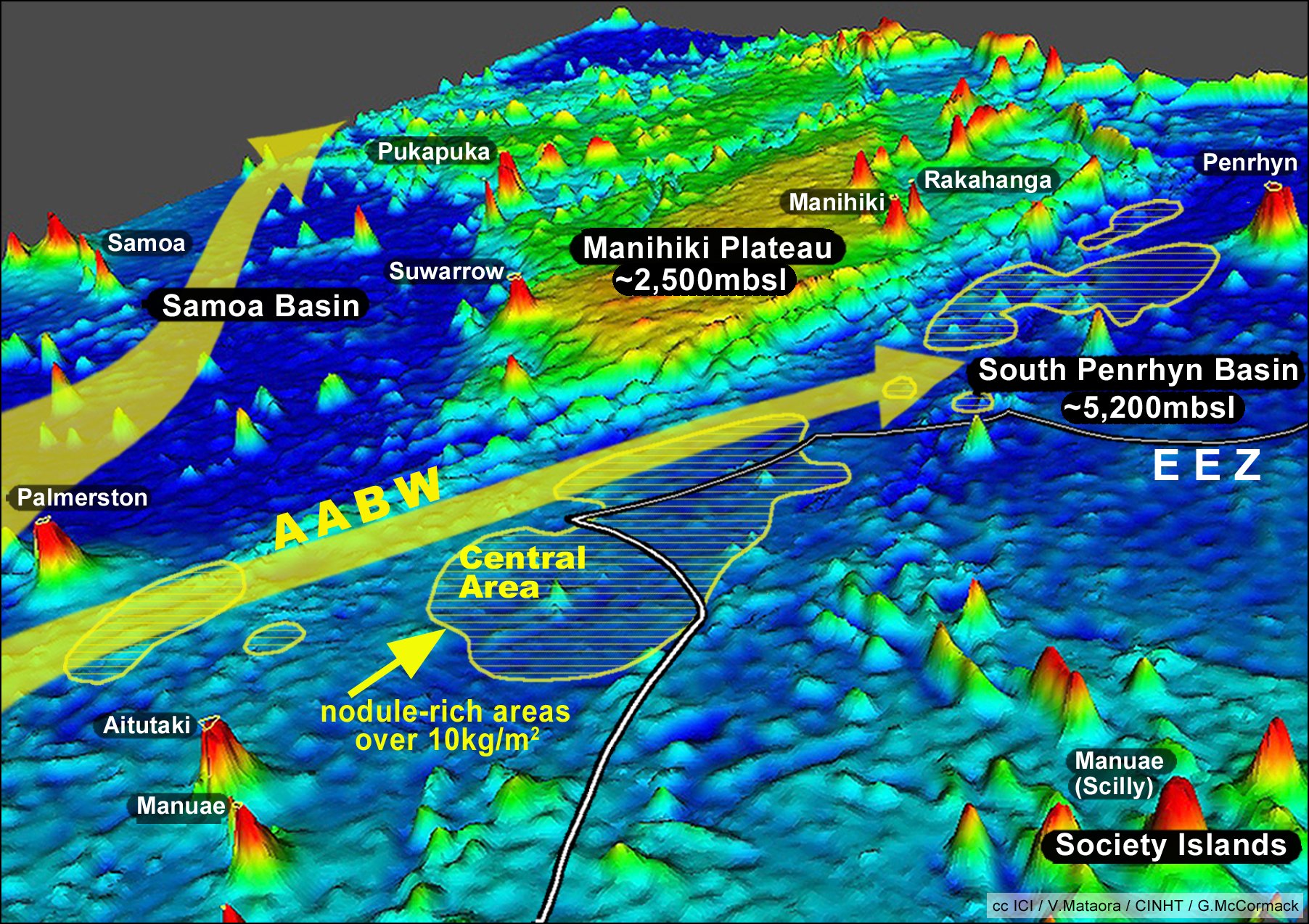
 In discussing this claim I will focus on deep sea services because with a precautionary approach to nodule mining the main impacts will be in the deep sea rather than the surface waters. The variety and global values of the main deep sea services are presented in the 2020 Food and Agriculture Organisation (FAO) circular: “Economic value of ecosystem services from the deep sea and the areas beyond national jurisdiction” (Ottaviani 2020).((Ottaviani (2020) Economic value of ecosystem services from the deep seas and the areas beyond national jurisdiction. FAO Fisheries and Aquaculture Circular No. 1210. Rome, FAO.)) Although the circular is focused on the “areas beyond national jurisdiction” (ABNJ), or International Waters, it also includes the deep sea within “exclusive economic zones” (EEZs), which makes it inclusive of the Cook Islands polymetallic nodule fields. Continue reading →