Cook Islands Seabed Minerals – the booklet

Cook Islands Seabed Minerals – the booklet

Gerald McCormack, Natural Heritage Trust
Booklet published 2016. Available here 28 April 2021
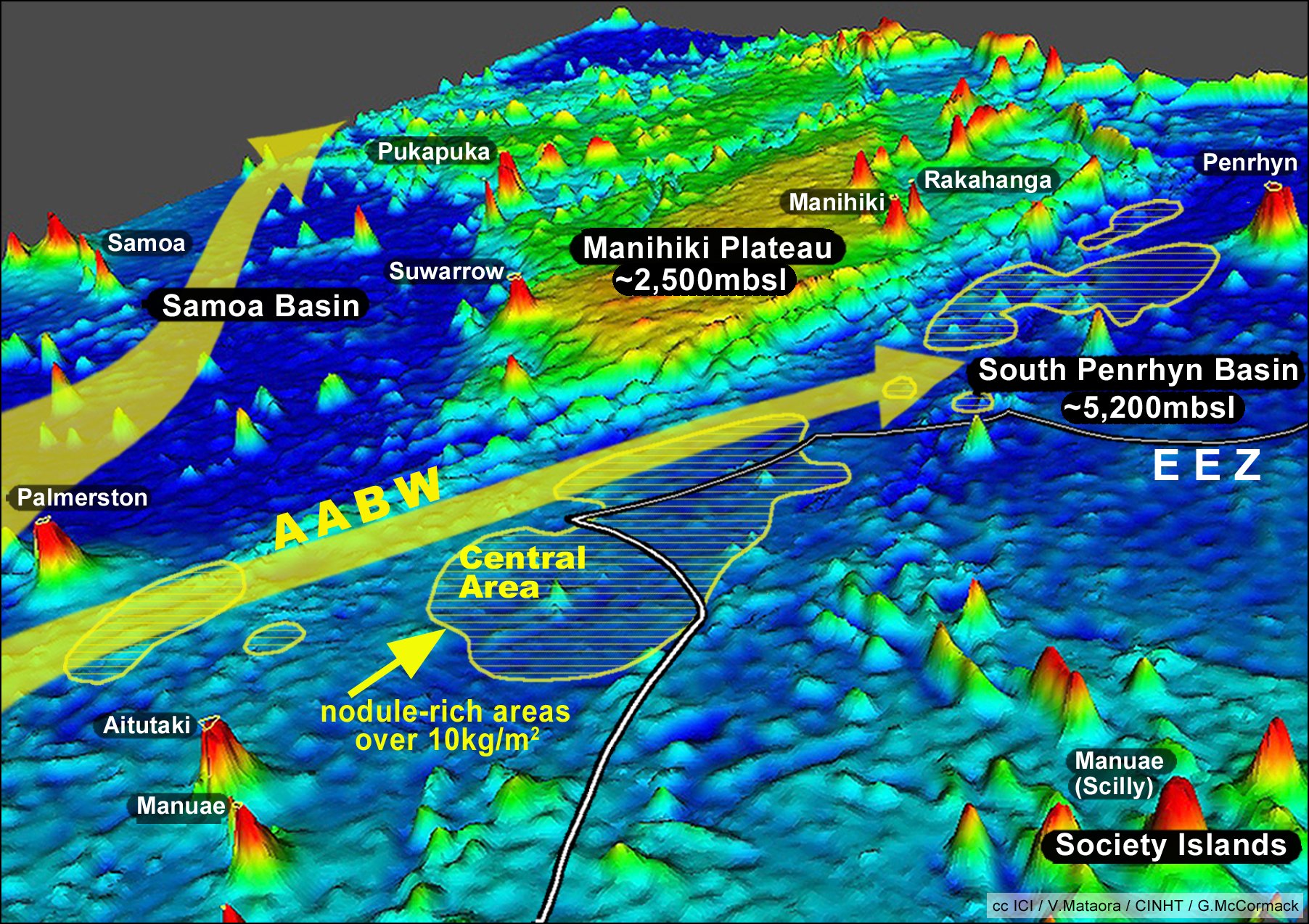
An oblique view of the seabed across the South Penrhyn Basin to the Manihiki Plateau.

The Trust’s booklet “Cook Islands Seabed Minerals – a precautionary approach to mining” was published in 2016 after three years of research.

The booklet provides baseline information on the environment and the possible impacts of a typical nodule mining scenario. The information should enable everyone to develop their own views and questions to participate in discussions.  And, in particular, to participate in the Environmental Impact Assessment (EIA) that will decide if mining can occur or not.

You can open it to read and download here:  The Trust’s Booklet

Continue reading →

Posted by Gerald in Deep Seabed Mining, Marine, 0 comments
We’re away, home again in September

We’re away, home again in September

Gerald McCormack, Natural Heritage Trust
First published (14 April 2021), short version CI News (14 April 2021)


Plover in breeding plumage ready for April departure.

The Pacific Golden Plover, or Tōrea, is our most common Alaskan migrant. It is conspicuous on larger grassy areas during the summer and most are now in their dramatic breeding plumage and ready to depart. Continue reading →

Posted by Gerald in Animals, Ecology, Terrestrial, 0 comments
Anonymous TIS criticism misguided

Anonymous TIS criticism misguided

Gerald McCormack, Natural Heritage Trust
First published CINews (24 Feb. 2021), updated.

An illustration comparing the area destroyed under the scenario of a 6-mine total industry, compared to the nodule-rich habitat at two different densities of nodules.

The following article answers Te Ipukarea Society (TIS) criticisms (CI News 20 February) of the author’s article on the possible impacts of seabed mining on nodule-associated benthic megafauna (CI News 11 February). The original article is here: https://cinature.org/2021/02/17/nodule-mining-impact-on-benthic-megafauna/

TIS calls for independent research and the information I quoted on the megafauna in the Central South Penrhyn Basin (SPB) was exactly that. The Japanese scientists were independent researchers. Although their megafauna and macrofauna surveys were very limited, it was fortunate they were focused on the Central Area of the SPB, which has the highest concentration of nodules and is where mining, if it occurs, will probably be focused. As a result, their survey of “0.000001% of our EEZ” is both relevant and useful. Continue reading →

Posted by Gerald in Deep Seabed Mining, Marine, 0 comments
Cycads and their Golden Age

Cycads and their Golden Age

Joseph Brider, Natural Heritage Trust.
First published online (19 Feb 2021).

Japanese Sage-palm Cycad (Cycas revoluta) showing a mature plant with male (top) and female (bottom) reproductive organs in the right-hand inserts. The composite image was prepared by Gerald McCormack

Japanese Sago-palm with male reproductive structure in top insert and female structures in bottom insert. Photo: CINHT

What do Japanese Sago-palms, Queen Sago-palms and Cardboard Palms all have in common? Well… they are NOT palms, they are all Cycads! The ‘palm’ reference comes from the shape of their leaves and cylindrical trunks but these plants are not even closely related to palms!

These recently introduced plants to the Cook Islands represent a very, very old lineage of plants that predate the dinosaurs.  These are very slow-growing, long lived plants with some specimens in the wild being over 1000 years old1. A particular specimen of Cycad in Kew Gardens in the UK arrived at their botanical garden in 1775, making it 246 years old in 2021. Consequently, it also holds the record for being the oldest potted plant in the world2.

Let’s dive in and learn about the charismatic, but often misunderstood plants.

Continue reading →

  1. Hill, K., & Stevenson, D. (1998). The Cycad Pages. The Cycad Pages. Retrieved from https://plantnet.rbgsyd.nsw.gov.au/PlantNet/cycad/cycsour.html []
  2. Avis-Riordan, K. (2019, 07/23/2019). Meet the oldest pot plant in the world. Royal Botanic Gardens Kew. Retrieved from https://www.kew.org/read-and-watch/oldest-pot-plant-in-world-eastern-cape-giant-cycad#. []
Posted by Joseph in Ecology, Plants, Terrestrial, 0 comments
Nodule mining impact on benthic megafauna

Nodule mining impact on benthic megafauna

Gerald McCormack, Natural Heritage Trust
First published CI News 11 Feb. 2021, last update 23 Mar. 2021.

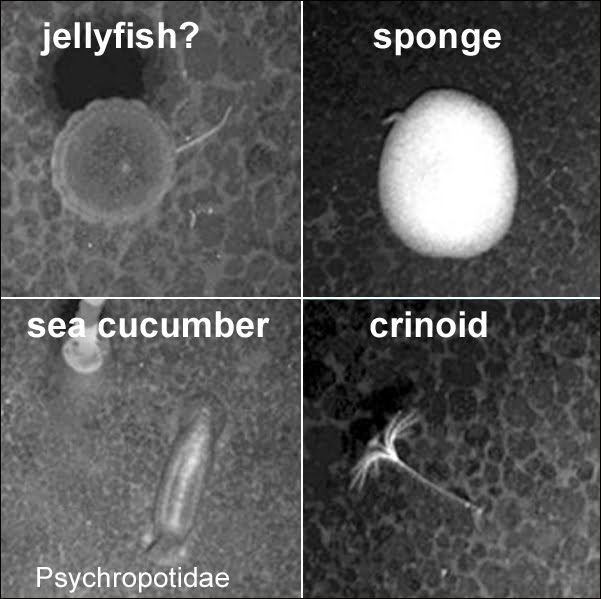
Examples of sessile and slow-moving benthic megafauna in the South Penrhyn Basin (SPB).

This article discusses the likely impact of nodule mining on the megafauna associated with nodules in the South Penrhyn Basin (SPB), from Penrhyn southward to Aitutaki and Palmerston. This impact was not among those discussed in the Trust’s 2016 booklet: “Cook Islands Seabed Minerals – a precautionary approach to mining”.

Benthic megafauna is recorded by still photography and video because these animals are larger than four centimetres and they are all visible on or above the seabed. Continue reading →

Posted by Gerald in Animals, Deep Seabed Mining, Marine, 1 comment
Load more