



Gerald McCormack, CINHT
The Cook Islands Biodiversity and Ethnobiology Database (CIBED) has been online since 2003 through the Bishop Museum in Honolulu. After several years of restructuring, it reopened in 2023 for the addition of new species at its new home address: https://naturalheritage.gov.ck/
The Natural Heritage Trust was established under an Act of Parliament in 1999 to record the traditional and scientific information on local plants and animals, both marine and terrestrial. CIBED has core information on 4,533 species, including 338 added since 2023.
In most countries, biodiversity databases focus on particular taxonomic groups, such as flowering plants, birds, fishes, agricultural pests, and lizards. CIBED is unusual in being able to record every type of living creature in the Cook Islands, even bacteria.
In CIBED, different groups are at very different stages of completion. For example, native flowering plants, at 185 species, are essentially complete, while introduced flowering plants, at 1,010 species, are incomplete, and more are arriving yearly. Nearshore fishes at 555 are relatively well recorded, although we know about fifty to be added. Seabirds, landbirds, migrants and vagrants stand at 85, which is complete except for the unpredictable arrival of vagrants, as recorded in this article for an American bird found on Penrhyn.
Marine shellfish are probably relatively complete at 412. However, as reported in this article, recent findings of four new intertidal air-breathing limpets show how unrecorded species hide in plain view. Insects are the most under-recorded group, and most new records in CIBED are insects, now numbering 816. We estimate there are more than 2,000 insects in the Cook Islands.
The most threatened group are native landsnails, with 53 extant and 15 recorded as extinct. Although the Convention on Biological Diversity commits us to prevent extinctions, we have no national projects on our native land snails.
This article draws attention to some of the species recently recorded in CIBED.
A special meitaki ma‘ata to the many who informed us of unrecorded species.
Noahs Giant Clam
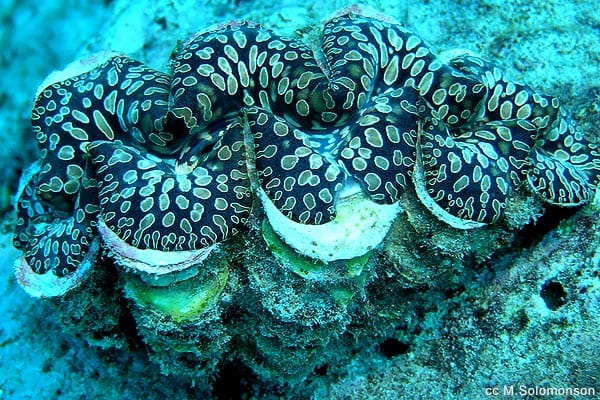
Noah’s Giant clam – Live in moat – Cook Islands, Rarotonga – M.Solomonson
Noah’s Giant Clam (Tridacna noae) was confused with the Small Giant Clam (Tridacna maxima). The separation was proposed in 2004 but not generally accepted until 2014. Rarotonga jumped the gun with a Research Grade record on iNaturalist in 2011, although genetic confirmation did not occur until 2023 in a Morejohn et al. paper. Pa‘ua is now two native species – both at risk.
Tropicbird-Booby Lousefly

Two louseflies on nestling [12mmBL] – Cook Islands, Aitutaki – Gerald McCormack 2024-10
Erythrina Borer moth
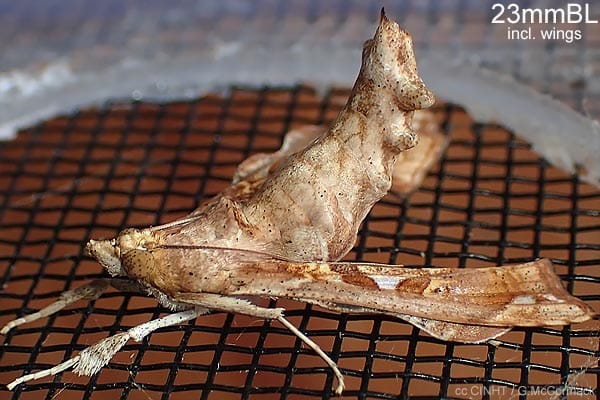
Erythrina Borer moth Live (Coll. Maja Poeschko) [23mmBL] – Cook Islands, Rarotonga – Gerald McCormack 2024-12
Paper wasp

Wasp infected by zombie fungus – Cook Islands, Rarotonga – Gerald McCormack 2021-12
In 2021, Kirby Morejohn found this paper wasp (Polistes olivaceus) riddled with a zombie fungus (Ophiocordyceps sp.) on the Summit of Maungatea in December 2021. Zombie fungi chemically altered the wasp’s brain, causing it to fly higher and higher before locking its jaws on the edge of a leaf to die. From this vantage point, the fungi release spores that are widely dispersed by the wind and eventually infect other wasps.
Air-breathing limpet
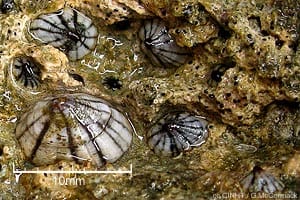
Ātiu Siphonaria, Live intertidal [10mmØ] – Cook Islands, Ātiu – Gerald McCormack 2009-05
Pacific Carpenter Ant

Carribean Banded Carpenter ants Live all castes (MEC garden) – Cook Islands, Rarotonga – Gerald McCormack 2014-01
Rarotonga’s giant ant was first reported by Kevin Henderson in equipment around Avatiu Harbour in 1999. The Trust recorded it as the Pacific Carpenter Ant (Camponotus chloroticus), assuming a Pukapuka origin. In January 2024, the Trust posted new detailed images on iNaturalist, and specialists identified them as the Caribbean Banded Carpenter Ant (Camponotus zonatus), previously found only in the Caribbean, Central America and the Galapagos. How it got to Avatiu is unknown.
Franklins gull
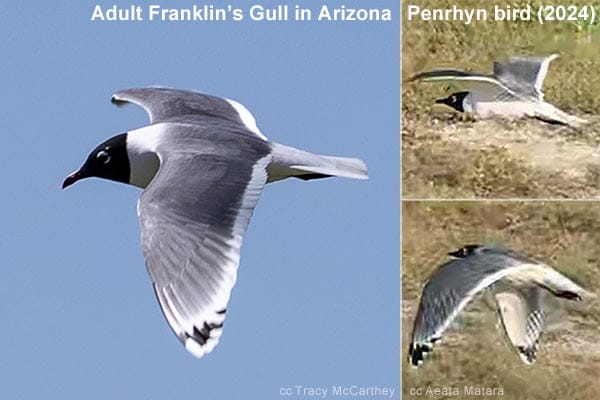
US reference bird and Penrhyn bird – Cook Islands, Penrhyn – Tracy McCarthey, Aeata Matara 2024-05
On Penrhyn, in April and May, Victor Niukore and Aeata Matara recorded the first Franklin’s Gull (Leucophaeus pipixcan) in the Cook Islands. This Canadian-US gull breeds April-September and then migrates southward to western South America to escape the northern winter. A few birds end up elsewhere, such as Hawai‘i, Australia and NZ. It is easily confused with the Laughing Gull (Leucophaeus atricilla), which has been locally recorded several times. The images enabled an identification.
Orange China-mark Moth

Orange China-mark Moth – SDJ Brown, Rarotonga 2024
Samuel Brown photographed this 2cm wide moth in Takuva’ine near the inland road in October 2024. The Trust identified it as the Orange China-mark Moth (Parapoynx villidalis), a new record for the Cook Islands. It is a native of Asia and Australia. The only other record in the Pacific is in Fiji (1992). Its caterpillar is aquatic in pools and wetlands, breathing through filamentous gills and eating aquatic plants.
Mysterious Jewel Moth.

Live oblique [3.0mmBL] – Cook Islands, Aitutaki – Gerald McCormack 2024-10
Rugous Little Dung Beetle

Rugous Little Dung Beetle Live showing wings [3.5mmBL] – Cook Islands, Rarotonga – Gerald McCormack 2018-04
White Mandevilla

White Mandevilla, Flowers and leaves – Cook Islands, Rarotonga – Anthony Wright 2024-12
Anthony Wright recorded the spectacular White Mandevilla (Mandevilla boliviensis) in Tītīkāveka in December. In recent years, Anthony and the late Joseph Brider have found a few dozen unrecorded ornamental plants in the gardens of Rarotonga. Most are yet to be uploaded to CIBED. As its Latin name indicated, this plant was initially found in Bolivia, although it is native to several countries in northern South America.
Buff‑tailed Bumblebee
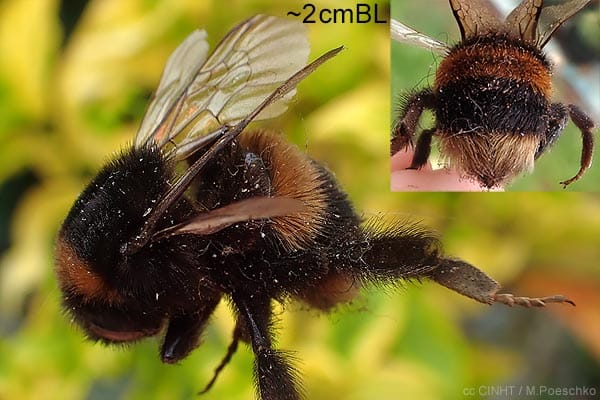
Buff‑tailed Bumblebee, Found dead in house [~2cmBL] – Cook Islands, Rarotonga – Maja Posechko 2025-01
Basket Six-arm Starfish
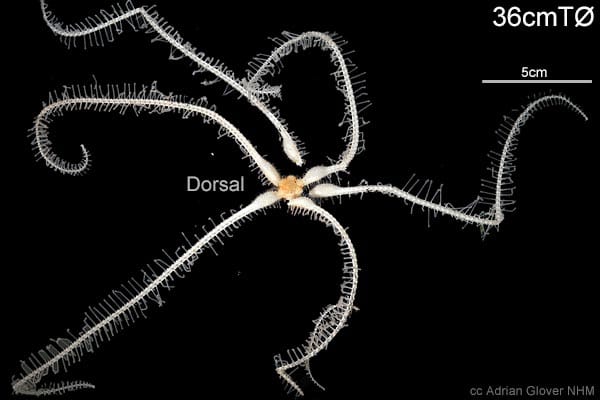
Basket six-arm starfish, Specimen from 4,900m depth [36cmTØ] – Cook Islands, Oceanic – Adrian Glover 2023-11
First published in the CINEWS (15 January 25)


